
The ruling against Myanmar stands as a landmark for international justice and a call for the end of military rule.
Staff Report,
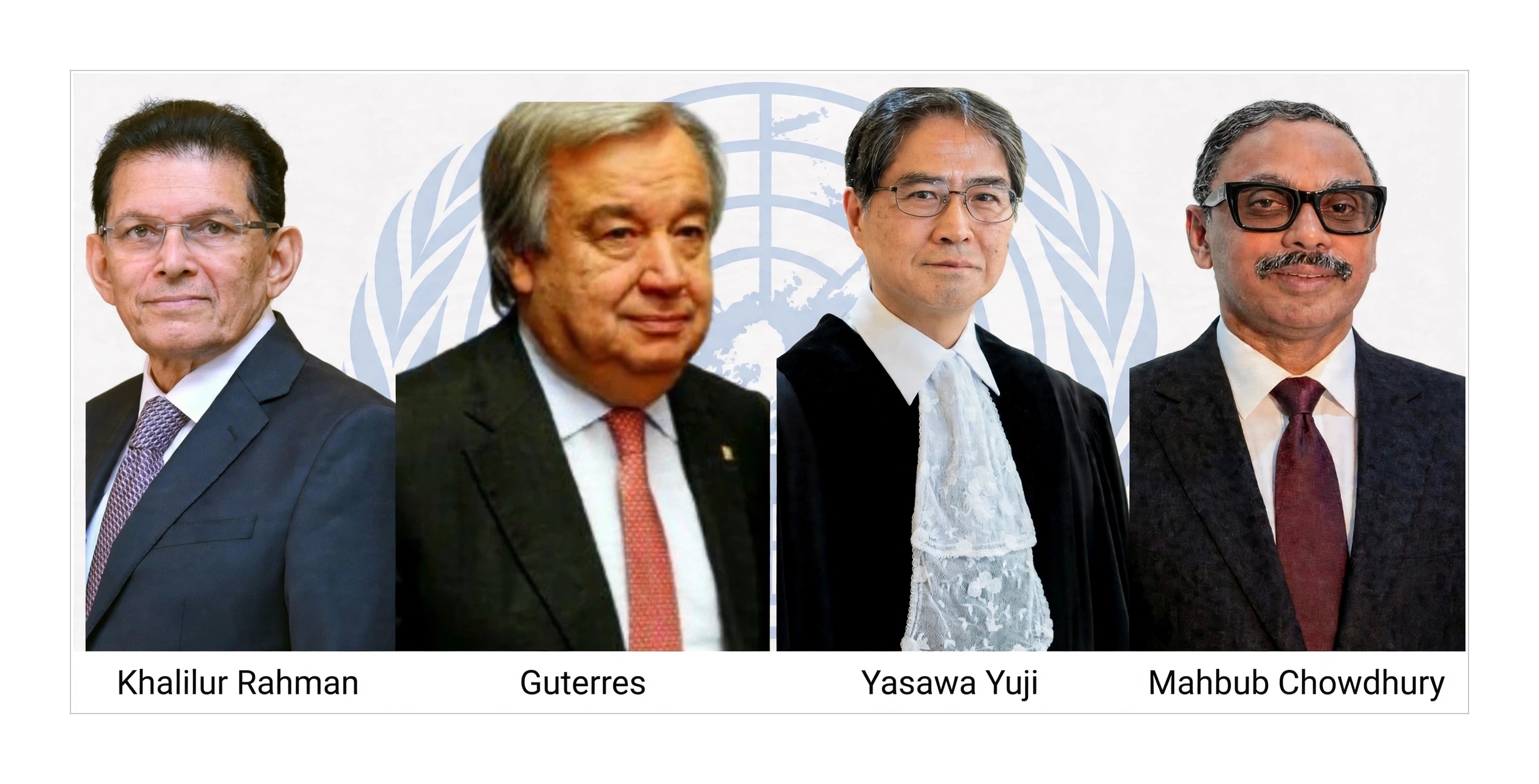
UN Secretary-General António Guterres described the ruling against Myanmar as a "milestone for international justice." He emphasized that a culture of impunity for such horrific acts cannot be allowed to persist. In a statement, he noted that the ruling is binding, final, and not subject to appeal. He further added, "Myanmar must take action in accordance with its obligation to comply with the court's decision."
Judge Yuji Iwasawa, President of the International Court of Justice (ICJ), stated in the ruling on the Rohingya genocide case that Myanmar committed genocide against the Rohingya population in northern Rakhine State, thereby violating its obligations under the Genocide Convention.
Regarding the genocide, the court—comprising a panel of 15 judges—concluded by a 9–6 vote that Myanmar carried out acts of genocide with the intent to destroy a substantial part of the Rohingya population. Evidence indicates that Myanmar’s security forces killed at least 10,000 Rohingya people. Furthermore, there were widespread incidents of sexual violence, extreme violence against children, the burning of villages, and attacks on Rohingya individuals fleeing to Bangladesh.
Khalilur Rahman, President of the 81st session of the UN General Assembly and Foreign Minister of Bangladesh, has urged Myanmar to ensure the safe, voluntary, and dignified repatriation of the Rohingya, to hold those responsible for the genocide accountable, and to provide appropriate reparations to the victims. He also stressed the need for reforms within legal and institutional frameworks to prevent any recurrence of such atrocities in the future.
He made these remarks on November 20 while visiting the Rohingya camps in Cox’s Bazar. Having traveled from New York to Bangladesh to meet with the Rohingya, he expressed his solidarity with them and called upon the international community to take effective measures to safeguard their rights. This information was shared by the Office of the Refugee Relief and Repatriation Commissioner in Cox’s Bazar via a Facebook post.
International expert Mahbub Chowdhury has described this as a pivotal moment for the Rohingya. This ruling by the ICJ will help create an environment for the safe, dignified, and voluntary return of the Rohingya to their homeland. To achieve this, it is essential to ensure peace, security, and the protection of fundamental rights, enabling the Rohingya to live with citizenship, equality, justice, and dignity. Lasting peace requires holding those responsible accountable, protecting all communities, and dismantling the structures that facilitate persecution and impunity. The political scientist also called for justice for the Rohingya, freedom for the people of Myanmar, an end to military rule, and a cessation of the military junta’s violence against civilians across Myanmar.
In a statement expressing disappointment with the ICJ’s ruling, the Myanmar authorities asserted that they had presented detailed and compelling evidence—including data and documentation—during both the written and oral proceedings. They argued that the allegations brought by The Gambia, as well as the reports they cited, were inconsistent with the actual situation and contained erroneous claims.
Referring to the Rohingya as "Bengalis," the country stated that the counter-terrorism operations conducted in northern Rakhine State between 2016 and 2018 were never intended to commit genocide; rather, they were limited in scope and short-lived, lasting only a few days. These actions, they claimed, were a direct response to large-scale terrorist attacks by the "Arakan Rohingya Salvation Army" (ARSA). In reality, it was ARSA’s threats, attacks, destruction, killings, and terrorist activities that reduced villages and towns to rubble, forcing both local residents and "Bengalis" to become displaced.
Myanmar further maintained that the situation in northern Rakhine State is highly complex and essentially an internal matter. The country urged the international community to view the difficult challenges it faces objectively and to play a constructive role in easing the situation while respecting Myanmar’s sovereignty, independence, and territorial integrity. Additionally, Naypyidaw stated that once conditions become favorable, the repatriation of those currently displaced in Bangladesh will commence,
কপিরাইট © সর্বস্বত্ব স্বত্বাধিকার সংরক্ষিত
